Metal Pallets
Engineered for extreme durability and maximum load capacity. Metal pallets are the go-to solution for heavy industry, automotive manufacturing, and any application where strength and longevity are non-negotiable.
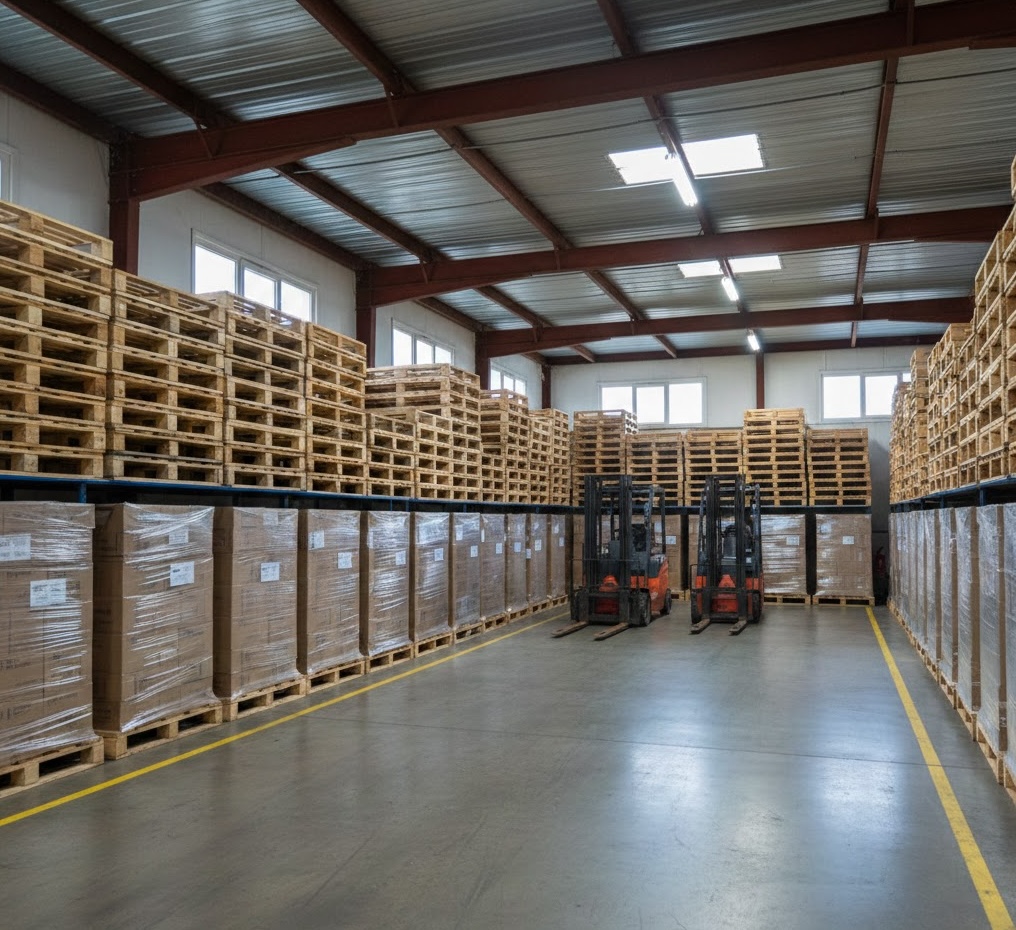
Heavy-Duty Metal Pallets
Steel and aluminum pallets for extreme load requirements
Get a Metal Pallet Quote
Tell us about your load requirements and application. We'll recommend the right metal pallet and provide competitive pricing.
Steel vs. Aluminum Pallets
Metal pallets are available in two primary materials, each with distinct advantages depending on your application and priorities.
Steel Pallets
Maximum Strength & Load Capacity
Steel pallets are the strongest pallet option available. Built from heavy-gauge steel, they can handle the most demanding loads and harshest environments. Ideal for heavy manufacturing, military applications, and long-term outdoor storage.
Key Specifications:
Advantages:
- Highest load capacity of any pallet material
- Fire resistant and non-combustible
- Withstands extreme temperatures
- Can be galvanized for corrosion resistance
- Weldable for field repairs
- Magnetic for easy handling with overhead cranes
Common Finishes:
Aluminum Pallets
Lightweight Strength & Corrosion Resistance
Aluminum pallets combine the durability of metal with significantly reduced weight. They are naturally corrosion-resistant, making them perfect for outdoor storage, maritime shipping, and humid environments like food processing facilities.
Key Specifications:
Advantages:
- 50% lighter than steel pallets
- Naturally corrosion-resistant (no coating needed)
- Ideal for humid and wet environments
- Easy to clean and sanitize
- Non-sparking for hazardous environments
- Excellent strength-to-weight ratio
Best For:
Load Capacities Explained
Metal pallets are rated for three types of load capacity. Understanding these ratings helps you select the right pallet for your specific use case.
Dynamic Load
The maximum weight a pallet can safely carry while being moved by a forklift or pallet jack. This is the load limit during transport and handling operations.
Most commonly referenced capacity for daily operations.
Static Load
The maximum weight a pallet can support when stationary on a flat surface or stacked. Static loads are always higher than dynamic loads because there is no movement stress.
Relevant for warehouse floor stacking and storage.
Racking Load
The maximum weight a pallet can support when placed on warehouse racking beams with the center span unsupported. This is the most demanding load scenario.
Critical for pallet racking system compatibility.
Metal vs. Other Materials: Load Capacity Comparison
| Metric | Wood | Plastic | Steel | Aluminum |
|---|---|---|---|---|
| Dynamic Load | 2,800 lbs | 2,500 lbs | 5,000 lbs | 3,500 lbs |
| Static Load | 5,000 lbs | 8,000 lbs | 15,000 lbs | 10,000 lbs |
| Racking Load | 2,200 lbs | 2,800 lbs | 4,000 lbs | 2,800 lbs |
| Pallet Weight | 30-70 lbs | 15-50 lbs | 40-75 lbs | 15-40 lbs |
| Lifespan | 3-5 yrs | 10+ yrs | 20+ yrs | 20+ yrs |
Industries That Rely on Metal Pallets
Metal pallets are essential in industries where extreme loads, fire safety, or environmental conditions exceed the capabilities of wood and plastic.
Automotive Manufacturing
Move engine blocks, transmissions, and heavy body panels through assembly lines. Steel pallets withstand the weight and repetitive handling cycles of automotive production.
Heavy Manufacturing
Transport raw steel, castings, forgings, and heavy machinery components. Metal pallets handle loads that would crush wood or plastic alternatives.
Military & Defense
Metal pallets meet strict military specifications for durability, fire resistance, and stack strength. Used for ammunition, equipment, and supply logistics.
Aerospace
Aluminum pallets are essential for air freight where weight restrictions are strict. Also used in aerospace manufacturing for precision component handling.
Cold Storage & Freezers
Metal pallets perform consistently in extreme cold where wood becomes brittle and some plastics lose structural integrity. No moisture absorption issues.
Oil, Gas & Chemical
Non-combustible steel pallets are required in flammable environments. Chemical resistance protects against spills and exposure to corrosive substances.
Stainless Steel vs. Aluminum vs. Galvanized Steel
Metal pallets come in three primary material options, each engineered for specific environments and performance requirements. This detailed comparison helps you select the optimal material for your application.
| Property | Stainless Steel (304/316) | Galvanized Carbon Steel | Aluminum (6061/5052) |
|---|---|---|---|
| Corrosion Resistance | Excellent (inherent) | Very Good (zinc coating) | Excellent (natural oxide) |
| Dynamic Load (48x40) | Up to 5,000 lbs | Up to 5,000 lbs | Up to 3,500 lbs |
| Pallet Weight (48x40) | 55 - 80 lbs | 50 - 75 lbs | 20 - 40 lbs |
| Temperature Range | -320F to 1,500F | -40F to 750F | -320F to 400F |
| Hygiene / Washability | Pharmaceutical grade | Good (coating may chip) | Excellent (smooth surface) |
| Spark Resistance | Minimal sparking | Can spark on impact | Non-sparking |
| Magnetic | Most grades: No | Yes (crane compatible) | No |
| Weldability | Good (TIG recommended) | Excellent (MIG/TIG) | Requires specialized TIG |
| Cost (per pallet) | $250 - $500+ | $100 - $200 | $80 - $180 |
| Best Environments | Pharma, food, chemical, marine | Outdoor, heavy industry, military | Air freight, food, maritime |
| Scrap Value | Highest ($$$) | Good ($$) | Very Good ($$) |
| Lifespan | 30+ years | 20+ years | 20+ years |
Stainless Steel: Best For
Pharmaceutical clean rooms, food processing facilities, chemical plants, and marine environments where maximum corrosion resistance and hygiene are non-negotiable. The premium choice for the most demanding applications.
Galvanized Steel: Best For
Heavy manufacturing, outdoor storage, military logistics, and any application where maximum load capacity and durability at a reasonable cost are the priorities. The workhorse of metal pallets.
Aluminum: Best For
Air freight, food processing, maritime shipping, and any environment where weight savings, natural corrosion resistance, and non-sparking properties are important. Delivers metal strength at near-plastic weight.
Metal Pallet Load Testing
Every metal pallet we supply is rated through standardized load testing procedures. Understanding these test methods ensures you select pallets with appropriate safety margins for your application.
Dynamic Load Test (ISO 8611)
Simulates the load a pallet carries while being transported by forklift or pallet jack. The pallet is loaded evenly and lifted, measuring deflection and structural integrity under movement stress. Dynamic ratings represent the safest load during transport.
Typical Rating: Steel: 5,000 lbs | Aluminum: 3,500 lbs
Safety Factor: 1.5x safety factor applied to rated capacity
Static Load Test (ISO 8611)
Measures the maximum weight a pallet supports while stationary on a flat surface. The pallet is loaded incrementally until maximum rated capacity is reached, monitoring for deflection, cracking, or permanent deformation.
Typical Rating: Steel: 15,000 lbs | Aluminum: 10,000 lbs
Safety Factor: 2.0x safety factor for warehouse floor stacking
Racking Load Test (ISO 8611)
The most demanding test. Pallets are placed on racking beams with the center span unsupported, simulating real-world warehouse racking conditions. This tests the pallet's ability to support weight without the benefit of a flat surface underneath.
Typical Rating: Steel: 4,000 lbs | Aluminum: 2,800 lbs
Safety Factor: 1.5x safety factor for racking applications
Impact and Drop Test
Pallets are dropped from specified heights to simulate rough handling during transport and loading dock operations. Steel pallets absorb impacts without cracking, while aluminum may dent but maintains structural integrity.
Typical Rating: Drop height: 12-36 inches with rated load
Safety Factor: Must retain full capacity after impact
Compression (Stacking) Test
Measures the maximum stacking weight a pallet can support without damage to the pallet or its load. This is critical for warehouse operations where loaded pallets are stacked multiple levels high on the floor.
Typical Rating: Steel: 6+ pallets high | Aluminum: 4+ pallets high
Safety Factor: Based on uniform load distribution
Fatigue and Cycle Test
Pallets undergo thousands of simulated handling cycles to verify long-term durability. This accelerated aging test confirms that metal pallets maintain rated performance over their expected 20+ year lifespan.
Typical Rating: 10,000+ cycles at rated dynamic load
Safety Factor: No degradation in rated capacity over test period
Custom Metal Pallet Engineering
When standard metal pallets do not meet your requirements, our engineering team designs custom solutions from the ground up. We combine CAD design, finite element analysis, and decades of fabrication expertise to deliver pallets that perform exactly as specified.
CAD Design & FEA Analysis
Every custom metal pallet starts with detailed CAD modeling. Finite Element Analysis (FEA) simulates real-world loading conditions to optimize material thickness, reinforcement placement, and overall design before a single piece of metal is cut.
Material Optimization
Our engineers select the optimal alloy, gauge, and configuration to meet your load requirements while minimizing weight and cost. This might mean using thicker steel in high-stress areas and lighter aluminum elsewhere.
Integrated Accessories
Custom metal pallets can incorporate built-in features like drip pans for fluid containment, divider slots, stacking posts, forklift guides, caster mounts, tie-down points, and RFID tag holders.
Prototype to Production
We produce prototype pallets for physical testing and approval before committing to a full production run. This iterative process ensures the final product meets every requirement without expensive mid-production changes.
Custom Engineering Process
Requirements Gathering
Day 1We document your load specifications, environment, handling methods, and any special requirements.
Concept Design
Days 2-4Our engineers create initial CAD models with 2-3 design options for your review and feedback.
FEA & Optimization
Days 5-7Finite Element Analysis validates the design under simulated real-world conditions. Design is refined.
Prototype Fabrication
Days 8-14A physical prototype is built for hands-on testing and approval at your facility.
Testing & Approval
Days 15-18The prototype undergoes load testing to verify rated capacities. You approve the final design.
Production Run
Days 19-40Full production begins with quality inspections at every stage. First delivery in 3-4 weeks.
Durability & Lifespan
Metal pallets represent a long-term investment. While the initial cost is higher than wood or plastic, the exceptional lifespan and minimal maintenance requirements deliver the lowest total cost of ownership over time.
20+ Year Lifespan
With proper handling, metal pallets can last over two decades. Many facilities use the same steel pallets for 15-25 years before replacement.
Minimal Maintenance
Unlike wood pallets that require regular inspection for broken boards and nails, metal pallets need virtually no maintenance beyond occasional cleaning.
Weather Resistant
Metal pallets can be stored outdoors in rain, snow, and extreme heat without degradation. Galvanized steel and aluminum are naturally corrosion-resistant.
Fire Resistant
Steel and aluminum pallets are non-combustible, making them the only safe option for environments with fire hazards, such as chemical plants and refineries.
Repairable
Damaged steel pallets can often be welded and restored to full functionality, extending their already long lifespan even further.
Cost of Ownership Over 20 Years
While metal pallets cost more upfront, their extended lifespan means you buy far fewer pallets over time. Here is a simplified comparison for a facility using 100 pallets.
Wood Pallets
$6,000 - $8,400$1,200
4-6 cycles
Plastic Pallets
$5,000 - $10,000$5,000
1-2 cycles
Steel Pallets
$10,000$10,000
0 cycles
* Estimates based on average market prices and typical use conditions. Actual costs vary by size, grade, and supplier.
Recyclability of Metal Pallets
Metal is one of the most recycled materials on Earth. When metal pallets finally reach the end of their long lifespan, they retain significant value as recyclable material.
Both steel and aluminum are 100% recyclable without any loss of quality. The metal from a scrapped pallet can be melted down and reformed into a new pallet or any other metal product.
Steel is the most recycled material in North America, with a recovery rate exceeding 90%. Your old steel pallets will almost certainly be recycled, not landfilled.
Recycling aluminum uses 75% less energy than producing aluminum from raw bauxite ore. Recycling steel saves approximately 60% of the energy required for new production.
Unlike wood pallets that have little to no scrap value, metal pallets retain significant monetary value at end of life. Scrap steel and aluminum can be sold to metal recyclers.
Metal pallets never end up in landfills. The economic value of scrap metal ensures that every metal pallet is recycled at the end of its useful life.
Unlike plastic, which degrades with each recycling cycle, metal can be recycled an infinite number of times without losing any structural properties or quality.
Metal Pallet FAQ
Are metal pallets worth the higher upfront cost?
For applications that require extreme load capacity, fire resistance, or very long lifespan, metal pallets often deliver the lowest total cost of ownership. A single steel pallet can outlast 5-7 wood pallets, making the per-use cost comparable or even lower.
Can metal pallets be used with standard pallet jacks and forklifts?
Yes. Metal pallets are designed with standard fork entry dimensions and work with all standard material handling equipment, including pallet jacks, forklifts, and automated guided vehicles (AGVs).
Do metal pallets need heat treatment for international shipping?
No. Like plastic pallets, metal pallets are exempt from ISPM-15 heat treatment requirements because they cannot harbor wood-boring pests. This saves time and cost on export shipments.
How heavy are metal pallets compared to wood?
Steel pallets weigh 40-75 lbs, which is heavier than most wood pallets (30-70 lbs). However, aluminum pallets weigh only 15-40 lbs, making them lighter than many wood pallets while being far stronger.
Can damaged metal pallets be repaired?
Steel pallets can be welded and repaired in most cases. Aluminum pallets can also be welded but require specialized TIG or MIG welding. Field repairs are often possible for steel but may require a shop for aluminum.
Do you sell used metal pallets?
Yes. We carry both new and used metal pallets. Used metal pallets offer significant savings and, given their durability, still have many years of service life remaining. Contact us for current inventory and pricing.
Steel vs. Aluminum: Complete Comparison
Choosing between steel and aluminum depends on your priorities: maximum strength or reduced weight. This side-by-side comparison covers every factor that matters.
| Factor | Steel Pallets | Aluminum Pallets |
|---|---|---|
| Dynamic Load Capacity | Up to 5,000 lbs | Up to 3,500 lbs |
| Static Load Capacity | Up to 15,000 lbs | Up to 10,000 lbs |
| Pallet Weight (48x40) | 50-75 lbs | 20-40 lbs |
| Corrosion Resistance | Requires coating (galvanized/painted) | Naturally corrosion-resistant |
| Fire Resistance | Excellent (melting point: 2,500F) | Good (melting point: 1,200F) |
| Magnetic Properties | Yes (crane compatible) | No |
| Spark Resistance | Can spark on impact | Non-sparking |
| Weldability | Easy (standard MIG/TIG) | Requires specialized TIG/MIG |
| Recyclability | 100% (highest scrap value) | 100% (good scrap value) |
| Typical Cost (48x40) | $100-$200 each | $80-$180 each |
| Best Environment | Heavy industry, outdoor, military | Air freight, food, maritime, pharma |
| Lifespan | 20+ years | 20+ years |
Choose Steel When:
- Maximum load capacity is your top priority
- Pallets will be used outdoors or in harsh conditions
- Fire resistance is required (chemical plants, refineries)
- You need magnetic compatibility for overhead crane handling
- Field weld repairs need to be simple and quick
Choose Aluminum When:
- Weight reduction is critical (air freight, worker safety)
- Pallets will be exposed to moisture or humid environments
- Non-sparking properties are required (hazmat areas)
- Hygiene and easy cleaning are important (food, pharma)
- You want corrosion resistance without coatings
Load Capacity Specifications by Size
Detailed load ratings for every standard metal pallet size we carry. All specifications are for standard-gauge construction. Heavy-gauge options available for higher loads.
| Size | Material | Pallet Weight | Dynamic Load | Static Load | Racking Load |
|---|---|---|---|---|---|
| 48" x 40" | Steel | 55 lbs | 5,000 lbs | 15,000 lbs | 4,000 lbs |
| 48" x 40" | Aluminum | 28 lbs | 3,500 lbs | 10,000 lbs | 2,800 lbs |
| 48" x 48" | Steel | 65 lbs | 5,000 lbs | 15,000 lbs | 4,000 lbs |
| 48" x 48" | Aluminum | 35 lbs | 3,500 lbs | 10,000 lbs | 2,800 lbs |
| 42" x 42" | Steel | 50 lbs | 4,500 lbs | 13,000 lbs | 3,500 lbs |
| 42" x 42" | Aluminum | 24 lbs | 3,000 lbs | 8,500 lbs | 2,500 lbs |
| 48" x 45" | Steel | 60 lbs | 5,000 lbs | 14,000 lbs | 3,800 lbs |
| 48" x 36" | Steel | 48 lbs | 4,500 lbs | 12,000 lbs | 3,500 lbs |
| Custom | Steel/Alum | Varies | Up to 8,000 lbs | Up to 25,000 lbs | Up to 6,000 lbs |
Heavy-gauge and reinforced options available for loads exceeding standard ratings. Contact us for engineered solutions for extreme load requirements.
Industrial Applications In Detail
Metal pallets serve the most demanding applications across heavy industry. Here is a closer look at how specific sectors use our steel and aluminum pallets.
Automotive Manufacturing
SteelAutomotive plants use steel pallets for engine blocks (400-800 lbs each), transmission housings, body stampings, and assembled drivetrain components. The repetitive handling cycles in just-in-time manufacturing require pallets that maintain exact dimensions after thousands of forklift interactions.
- Typical load: 2,000-4,500 lbs per pallet
- 5,000+ handling cycles over pallet lifetime
- Custom divider inserts for part protection
- Stackable design for empty return shipping
- Color-coded for part number identification
Military & Defense
SteelMilitary specifications (MIL-STD) require pallets that withstand rough handling, outdoor storage in all climates, and extreme stacking loads. Steel pallets meet these requirements while also providing fire resistance for ammunition and ordnance storage.
- MIL-STD compliant construction
- Fire-resistant for ammunition storage
- Corrosion-resistant (galvanized or painted)
- Air-droppable configurations available
- Compatible with military logistics systems
Heavy Machinery & Equipment
SteelSteel pallets transport CNC machines, industrial pumps, generators, and other heavy equipment weighing several thousand pounds. Standard wood and plastic pallets cannot safely support these loads without risk of failure.
- Loads up to 5,000 lbs dynamic
- Custom footprints for specific equipment
- Tie-down points for load securing
- Reinforced deck for point loads
- Forklift pockets for all standard equipment
Air Freight & Logistics
AluminumWeight restrictions in air cargo make aluminum pallets essential. They meet ULD (Unit Load Device) compatibility requirements while minimizing tare weight to maximize payload capacity on every flight.
- 50% lighter than equivalent steel pallets
- Meets IATA and ULD specifications
- Compatible with aircraft roller systems
- Non-sparking for hazmat air shipments
- Corrosion-resistant for international routes
Corrosion Resistance & Surface Treatments
Untreated steel will corrode over time, especially in humid or outdoor environments. Choosing the right surface treatment extends the lifespan of your steel pallets and ensures they perform reliably in demanding conditions.
Hot-Dip Galvanizing
The most durable coating option. Steel pallets are dipped in molten zinc at 840F, creating a metallurgical bond that provides 20-50 years of corrosion protection. Ideal for outdoor storage and maritime environments.
Powder Coating
Electrostatically applied dry powder is cured under heat to form a hard, attractive finish. Available in any color for branding and identification. Provides excellent corrosion and abrasion resistance.
Zinc Plating (Electroplating)
A thinner zinc layer applied through electrolysis. More affordable than hot-dip galvanizing and provides a bright, attractive finish. Best for indoor use and moderate humidity environments.
Stainless Steel Construction
For the most demanding corrosion environments, pallets can be fabricated from 304 or 316 stainless steel. Significantly more expensive but provides inherent corrosion resistance without any coating.
Aluminum (No Treatment Needed)
Aluminum pallets form a natural oxide layer that provides excellent corrosion resistance without any applied coating. They maintain their appearance and structural integrity in wet and humid environments indefinitely.
Treatment Comparison
Custom Fabrication Options
Our metal fabrication partners can engineer and build metal pallets to virtually any specification. From custom dimensions to integrated features, we deliver exactly what your application demands.
Custom Dimensions
Any size from miniature sample pallets to oversized platforms spanning 10 feet or more. We engineer structural support for your specific load profile and dimensions.
Integrated Features
Drip pans for fluid containment, divider slots for organized storage, stacking posts for secure multi-level storage, and attachment points for specialized handling equipment.
Collapsible & Foldable
Hinged metal pallets that fold flat when empty, reducing return shipping costs by up to 75%. Popular for international shipping and operations with significant empty pallet backhaul.
Caster-Mounted
Metal pallets with integrated casters or wheels for easy manual movement across facility floors. Available with locking casters and floor-protecting wheel materials.
Reinforced for Point Loads
Standard pallet decks distribute loads across the surface. For concentrated point loads from machinery, equipment, or heavy drums, we reinforce specific areas to prevent deck deflection.
Multi-Material Hybrid
Combine steel frames with aluminum decks, plastic tops, or wood surfaces to get the best properties of each material. Hybrid pallets optimize cost, weight, and performance simultaneously.
Describe your application and requirements, and our engineering team will design the optimal metal pallet solution.
Start a Custom ProjectNeed Heavy-Duty Pallet Solutions?
Our metal pallet experts can help you select the right material, size, and configuration for your application. Get a free consultation and quote today.