Recycling & Disposal
Responsible, eco-friendly pallet recycling that diverts 95%+ of materials from landfills. Every broken pallet becomes a valuable resource.
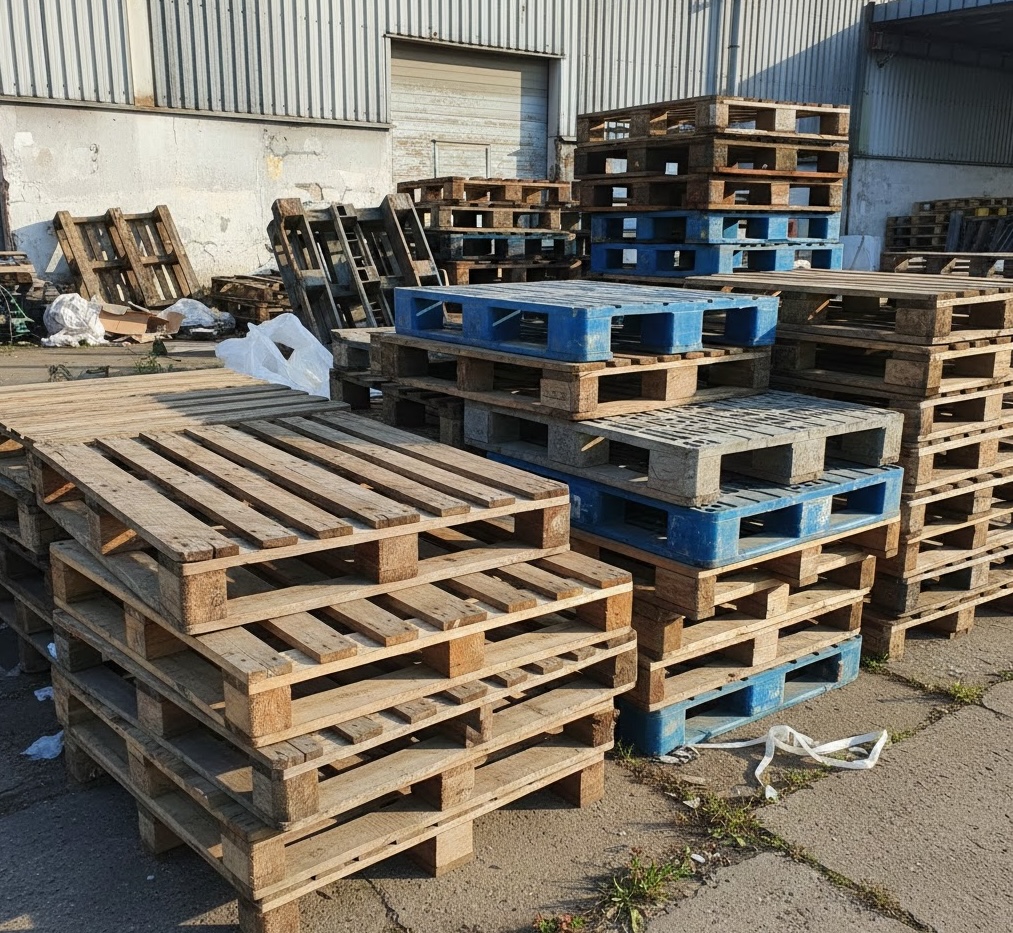
Responsible Pallet Recycling
We recover materials, reduce waste, and keep pallets out of landfills
Schedule Recycling Pickup
Have pallets that need responsible disposal? We pick up and recycle them with zero waste sent to landfill.
Frequently Asked Questions
What happens to pallets you recycle?+
Usable boards are reclaimed for repairs, and remaining material becomes mulch, animal bedding, or biomass fuel to avoid landfill.
Can you provide diversion reporting?+
Yes. We issue environmental impact reports showing landfill diversion volumes and carbon savings for your ESG tracking.
Do you remove contaminated pallets?+
We can handle most non-hazardous pallets; share details on any contamination so we can confirm acceptance and process safely.
Is there a fee for recycling pickups?+
Depending on condition, volume, and lane, pickups may be paid, free, or fee-based. We quote before scheduling.
Can you recycle broken pallets from multiple sites?+
Yes. We set up multi-site recycling programs with consolidated reporting and scheduled collections.
Every Pallet Matters
In the United States, an estimated 420 million pallets end up in landfills every year. That is over 8 billion pounds of reusable wood taking up space and releasing methane as it decomposes. We believe none of it should go to waste.
The Recycling Journey
From pickup to finished product, here is exactly what happens to every pallet that enters our recycling stream.
Collection & Pickup
We collect pallets from your facility using our fleet of trucks. Whether you have 50 or 5,000, we schedule a pickup that fits your operations. Our drivers handle all loading so you do not need to dedicate labor.
We offer one-time cleanouts and recurring scheduled pickup programs.
Sorting & Inspection
At our facility, every pallet is individually assessed. Pallets that can be repaired and returned to service are separated from those destined for material recycling. This maximizes the value recovered from every unit.
Even a single reusable board is salvaged and used for repairs.
Dismantling & Nail Removal
Pallets that cannot be reused whole are carefully dismantled. Nails, screws, and metal fasteners are removed and sent to metal recycling. Every piece of hardware is accounted for and recycled separately.
Metal recovery from fasteners accounts for thousands of pounds annually.
Wood Grinding & Chipping
Unrecoverable wood is processed through industrial grinders to produce wood chips, mulch, and wood fiber. These raw materials have numerous second-life applications across multiple industries.
Our grinders process up to 50 tons of wood per day.
Second-Life Products
The processed materials become mulch for landscaping, animal bedding for farms, biomass fuel for energy generation, particle board for construction, and composting material for agriculture. Nothing is wasted.
Every output product has a verified end-use buyer before processing begins.
Where Recycled Materials Go
Every component of a recycled pallet finds a second life. Here is what our processed wood and materials become.
Landscaping Mulch
35%Ground wood is dyed and processed into premium landscaping mulch used by municipalities, parks, and homeowners across the region.
Animal Bedding
20%Clean wood shavings become comfortable, absorbent bedding for horses, cattle, poultry, and other livestock on farms and equestrian facilities.
Biomass Fuel
15%Wood chips are used as biomass fuel in industrial boilers and energy generation plants, displacing fossil fuels and reducing carbon emissions.
Particle Board & OSB
15%Wood fiber is supplied to manufacturers of particle board, oriented strand board, and other engineered wood products for construction.
Composting Material
10%Fine wood particles are blended into commercial compost mixes, enriching soil for agriculture and supporting organic farming operations.
Metal Recycling
5%Nails, staples, and metal brackets extracted during dismantling are sorted and sent to metal recyclers, returning steel back into the supply chain.
The Ecological Case for Recycling
Pallet recycling is one of the most impactful sustainability actions a business can take. The numbers speak for themselves.
Prevents Deforestation
Every recycled pallet saves the equivalent of one young tree from being harvested. Our annual recycling volume preserves hundreds of thousands of trees that would otherwise be cut for new pallet production.
Reduces Carbon Emissions
Manufacturing a new pallet generates approximately 25-30 kg of CO2. Recycling eliminates 85% of those emissions. When wood decomposes in landfills, it releases methane, a greenhouse gas 28 times more potent than CO2.
Conserves Water
Lumber production consumes significant water resources. By recycling pallets instead of manufacturing new ones, we conserve an estimated 3.5 gallons of water per pallet that would otherwise be used in harvesting and processing.
Reduces Landfill Burden
Wood pallets account for approximately 8-10% of all municipal solid waste in the US. Our recycling operations divert millions of pounds from overburdened landfills every single year.
Environmental Savings Per 1,000 Pallets Recycled
Recycling Process Step-by-Step
Our recycling facility is purpose-built for maximum material recovery. Here is a detailed look at every stage of the process, from the moment a pallet arrives to the moment its materials begin their second life.
Receiving & Weighing
Incoming pallet loads are weighed on our certified truck scale. This establishes the baseline tonnage for processing metrics and environmental reporting. Each load is assigned a unique batch tracking number.
Visual Triage
Trained sorters perform an initial visual assessment. Pallets with reuse or repair potential are separated immediately. Approximately 15-25% of incoming volume is diverted to repair rather than recycling.
Mechanical Dismantling
Pallets designated for recycling enter our dismantling line. Purpose-built pallet dismantling equipment separates boards from stringers while preserving reusable lumber for our repair operation.
Metal Extraction
Powerful industrial magnets and metal detectors remove all nails, staples, screws, and metal brackets from the wood stream. This produces clean metal scrap for steel recycling and ensures safe wood processing.
Primary Grinding
Clean wood enters our industrial horizontal grinder, which reduces boards and stringers to coarse wood chips approximately 2-4 inches in size. The grinder processes up to 50 tons per day.
Secondary Processing & Screening
Coarse chips pass through a secondary grinder and then through vibrating screens that sort particles by size. Fine material becomes bedding or compost. Medium chips become mulch. Large chips become biomass fuel.
Contaminant Removal
Air separation systems and manual inspection remove any remaining non-wood contaminants including plastic, paper labels, and dirt. This ensures our output products meet buyer specifications for purity.
Product Stockpiling
Finished products are stockpiled by category in designated storage areas. Mulch is separated by color (natural, red, brown, black). Bedding is stored under cover. Biomass chips are staged for transport.
Quality Testing
Random samples from each production batch are tested for moisture content, particle size distribution, and contaminant levels. Products must meet buyer specifications before release.
Outbound Shipping
Finished products are loaded onto trucks for delivery to end-use buyers: landscaping companies, farms, power plants, particle board manufacturers, and composting facilities across the region.
Materials Recovery: Every Component Counts
A standard wooden pallet contains multiple materials. We recover and repurpose every single one. Here is what happens to each component.
Reusable Boards & Stringers
Sound boards and stringers extracted during dismantling are saved for our pallet repair operation. These reclaimed components reduce the need for new lumber in repairs, saving resources and lowering costs.
Mulch-Grade Wood Chips
Medium-sized wood chips are processed, screened, and optionally dyed to produce landscaping mulch. Our mulch products are sold to landscaping companies, municipalities, parks departments, and retail garden centers.
Animal Bedding Shavings
Fine wood shavings are processed to create absorbent, comfortable animal bedding used in equestrian facilities, dairy farms, poultry operations, and pet supply manufacturing.
Biomass Fuel Chips
Larger wood chips that do not meet mulch or bedding specifications are sold as biomass fuel to industrial boilers and energy generation facilities, displacing fossil fuels in the process.
Sawdust & Fine Particles
The finest wood particles -- sawdust and wood flour -- are collected from grinding operations and sold to particle board manufacturers, composting operations, and industrial absorbent producers.
Metal Fasteners (Nails, Staples)
All metal hardware extracted during dismantling is collected, sorted, and sold to steel recyclers. The recovered metal is melted down and reintroduced into the steel supply chain as recycled raw material.
Corporate Sustainability Reporting Support
In an era of increasing ESG (Environmental, Social, and Governance) requirements, our recycling service provides the documentation and data your organization needs to demonstrate environmental responsibility.
Whether you are preparing an annual sustainability report, responding to investor ESG questionnaires, pursuing green building certifications, or meeting corporate environmental pledges, we provide the verified metrics to support your claims.
Recycling Volume Capabilities
Our facility is equipped to handle recycling volume at scale. Whether you generate a few dozen pallets a month or thousands per week, our processing capacity can accommodate your needs.
Zero Landfill Commitment
We have made a corporate commitment that no processable pallet material will ever be sent to a landfill. Here are the numbers that demonstrate our progress toward this goal.
What We Have Achieved
Our recycling operation currently diverts over 95% of all incoming pallet material from landfills. Every board, nail, and chip is directed to a productive second-life use -- mulch, bedding, fuel, particle board, compost, or metal recycling.
What We Are Improving
The remaining 4.3% consists primarily of heavily contaminated material (chemical spills, hazardous paint, biological contamination) that current recycling technology cannot safely process. We are investing in advanced cleaning and separation technology to address this.
How You Benefit
When you recycle pallets with us, you can confidently report that 95%+ of your pallet waste was diverted from landfill. We provide certified documentation to back up this claim for your sustainability reports, auditors, and stakeholders.
Zero-Waste Is Not a Slogan. It Is Our Standard.
We have built our entire operation around the principle that no pallet material should ever end up in a landfill. From the moment a pallet enters our facility to the moment every last fiber has been repurposed, we track, measure, and optimize for maximum material recovery.
Our investment in state-of-the-art grinding equipment, metal separation technology, and material sorting systems means we achieve recovery rates that exceed industry averages by a significant margin.
Environmental Certifications
From Pallet to Product: Our Material Flow
Every component of every pallet that enters our facility is tracked, sorted, and directed to its highest-value use. Here is the complete material flow.
Input Materials
Processing Steps
Output Products
Industries That Use Our Recycling Service
Any business that uses or accumulates pallets can benefit from our recycling program. Here are the most common industries we serve.
Warehousing & Distribution
Distribution centers accumulate damaged pallets daily. Our scheduled pickups keep your facility clean and compliant.
Manufacturing Plants
Production facilities generate pallet waste from inbound raw material shipments. We convert that waste into value.
Retail Stores
Big box retailers and grocery stores receive hundreds of pallets weekly. We handle the return logistics and recycling.
Construction Sites
Building material deliveries leave behind single-use pallets. We provide jobsite cleanout and recycling services.
Food Processing
Food-grade pallet management requires proper disposal of contaminated units. We recycle them responsibly.
Pharmaceutical
Strict pharmaceutical waste protocols require documented disposal. We provide full recycling certificates.
Government & Military
Federal and state facilities with sustainability mandates rely on our certified zero-waste recycling program.
Event & Convention
Trade shows and events generate temporary pallet waste. We offer one-time cleanout recycling services.
Recycling FAQ
Is there a cost for pallet recycling pickup?
In most cases, pallet recycling pickup is free of charge. For very small quantities (under 25 pallets) or remote locations, a nominal pickup fee may apply. We always communicate any costs upfront before scheduling.
Can you recycle pallets that have been contaminated?
We can recycle pallets with most non-hazardous contamination such as food residue, paint, or soil. Pallets contaminated with hazardous chemicals require special handling and should be disclosed at the time of scheduling. We will advise on the best disposal method.
Do you provide recycling certificates or documentation?
Yes. We provide detailed recycling certificates documenting the quantities processed, diversion rates achieved, and the final disposition of materials. These documents support your sustainability reporting and environmental compliance requirements.
What is the difference between recycling and disposal?
Disposal typically means sending materials to a landfill. Recycling means processing those materials into new products. Our service is true recycling -- we convert pallet wood into mulch, bedding, fuel, and other useful products. Nothing we process goes to a landfill.
How often can you pick up?
We offer one-time pickups and recurring schedules. Recurring customers can choose weekly, biweekly, or monthly pickups. We also accommodate on-call pickups when your pallet accumulation reaches a threshold quantity you define.
Can I watch the recycling process?
Yes. We welcome facility tours for customers and prospective clients. Seeing our zero-waste operation in action gives you confidence that your pallets are truly being recycled, not landfilled. Contact us to schedule a visit.
Recycle Responsibly. Protect the Planet.
Do not send your pallets to the landfill. Let us give every board, nail, and chip a second life. Schedule a recycling pickup today.