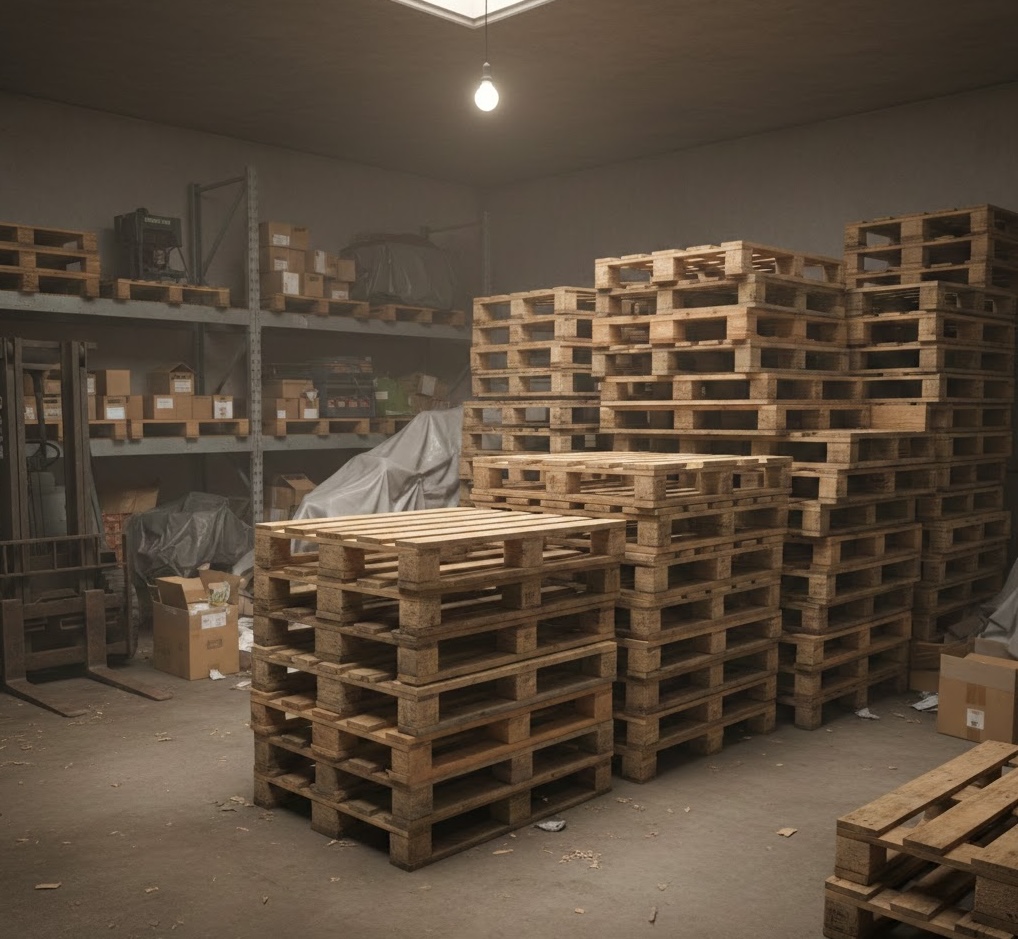
Pallet damage is an inevitable part of supply chain operations, but understanding the most common types of damage and their root causes can help you significantly reduce breakage rates, lower replacement costs, and improve workplace safety. Most pallet failures fall into five categories, and each has specific prevention strategies that are straightforward to implement. Whether you manage a warehouse, run a shipping operation, or purchase pallets for your business, this knowledge will help you extend pallet life and reduce waste.
Split stringers are the most structurally dangerous type of pallet damage. Stringers are the long boards that run the length of the pallet and provide the primary load-bearing structure. When a stringer splits, the pallet can fail catastrophically under load, creating a serious safety hazard. The primary cause is forklift impact, either from entering the pallet opening at an angle or from tines that are too wide or too narrow for the pallet design. Prevention starts with forklift operator training. Operators should approach pallets squarely, center their forks, and enter openings smoothly without ramming. Using forks that match pallet specifications and maintaining forklift equipment in good condition also reduces stringer damage.
Broken deck boards are the most common type of pallet damage and occur when individual top or bottom boards crack or break. Common causes include overloading beyond the pallet's rated capacity, concentrated point loads from improperly distributed products, impact from being dropped, and degradation from moisture exposure. Prevention involves matching pallet capacity to load weight, distributing products evenly across the deck surface, handling loaded pallets carefully, and storing pallets in covered areas when possible. When a deck board breaks, prompt repair by replacing the broken board can save the entire pallet at a fraction of replacement cost.
Protruding nails and fasteners pose an immediate safety risk to workers and can damage products and packaging. Nails work loose over repeated use cycles, rough handling, and wood shrinkage from moisture changes. This damage type is particularly dangerous because it often goes unnoticed until someone is injured or a product is punctured. Prevention requires regular pallet inspection before use, with any pallets showing raised or loose fasteners being pulled from service immediately. During repair, pneumatic nailing equipment should be properly calibrated to drive fasteners flush with the wood surface. Some operations are switching to screwed or bolted fasteners for pallets used in demanding applications.
Water damage and contamination affect both structural integrity and hygiene. Prolonged moisture exposure causes wood to swell, warp, and eventually rot, dramatically shortening pallet lifespan. Contamination from chemical spills, food products, or pest infestations can make pallets unsuitable for many applications. Prevention focuses on proper storage. Keep pallets off bare ground, store them under cover when possible, and orient them so water drains off rather than pooling on surfaces. For contamination, implement a quarantine process for pallets exposed to chemicals or biological materials, and remove visibly stained or contaminated pallets from general circulation. Fifth, forklift punctures through deck boards occur when operators drive tines through the top deck rather than into the pallet openings. This is almost entirely preventable through proper training and visibility. Ensure adequate lighting in pallet handling areas and paint or mark pallet entry points if visibility is an issue.
Tags: