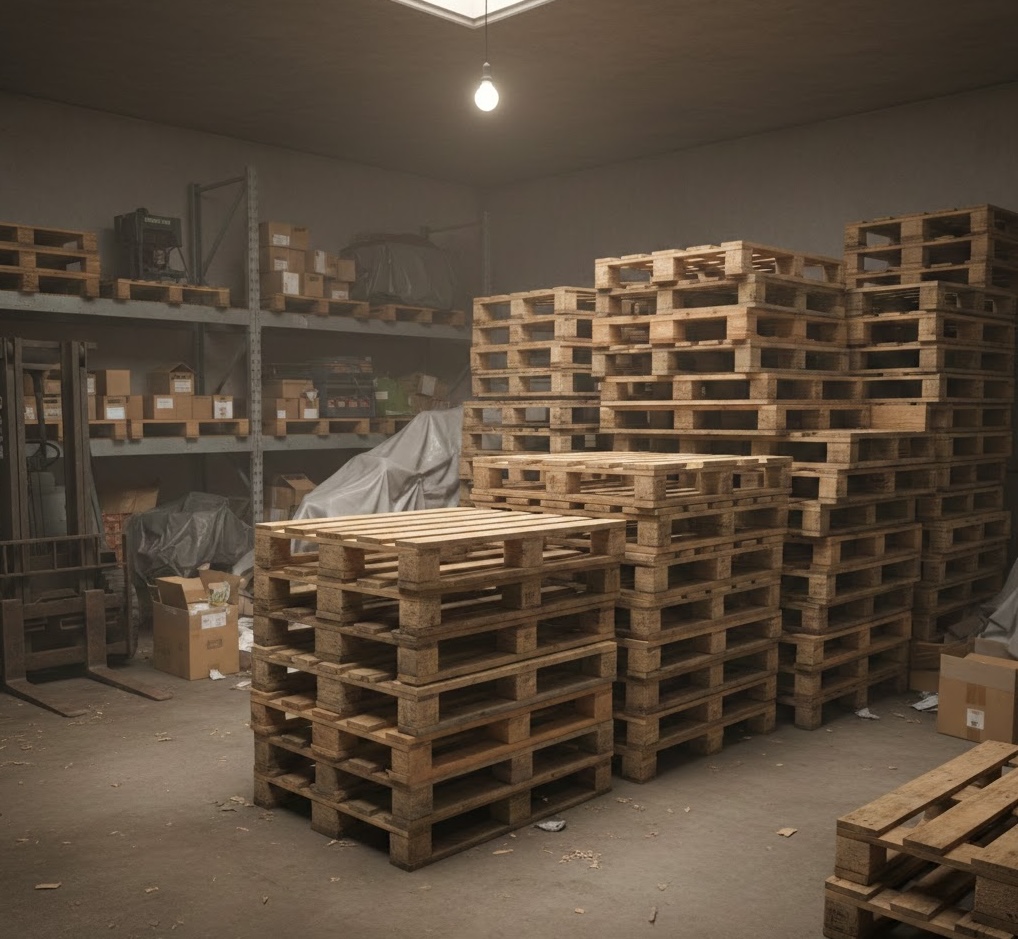
Proper pallet care and maintenance can dramatically extend the useful life of your pallets, reducing replacement costs and minimizing waste. While pallets are designed to be robust and handle significant loads, they are also subject to damage from improper handling, poor storage conditions, and neglect. Implementing a few simple best practices can help your pallets last through many more use cycles, saving your business money and supporting your sustainability objectives.
Storage is one of the most important factors in pallet longevity. Pallets should be stored in a dry, covered area whenever possible. Prolonged exposure to rain, snow, and direct sunlight accelerates deterioration of wood pallets. When stacking empty pallets, limit stack height to 15 pallets or less to prevent crushing of lower units. Store pallets on a flat, level surface to avoid warping. If outdoor storage is unavoidable, orient pallets so that water drains off rather than pooling on the deck boards, and rotate stock so that no pallets sit in the elements for extended periods.
Handling practices also significantly impact pallet life. Train forklift operators to approach pallets squarely and center the forks in the openings. Off-center lifting and dragging pallets are leading causes of damage. Ensure that forklift tines are the correct width for the pallets being handled. Avoid dropping loaded pallets, even from short heights, as the impact can crack stringers and loosen boards. When using pallet jacks, guide them straight into the pallet openings rather than at an angle, which can split lead boards.
Regular inspection and prompt repair are also essential. Implement a routine inspection process where pallets are checked before each use. Remove pallets with broken stringers, missing blocks, or more than two broken deck boards from service. Many of these pallets can be repaired rather than discarded. Establish a relationship with a pallet repair service or invest in basic repair capabilities. Replacing a single broken board costs a fraction of replacing the entire pallet and can extend its useful life by several more cycles.
Tags: