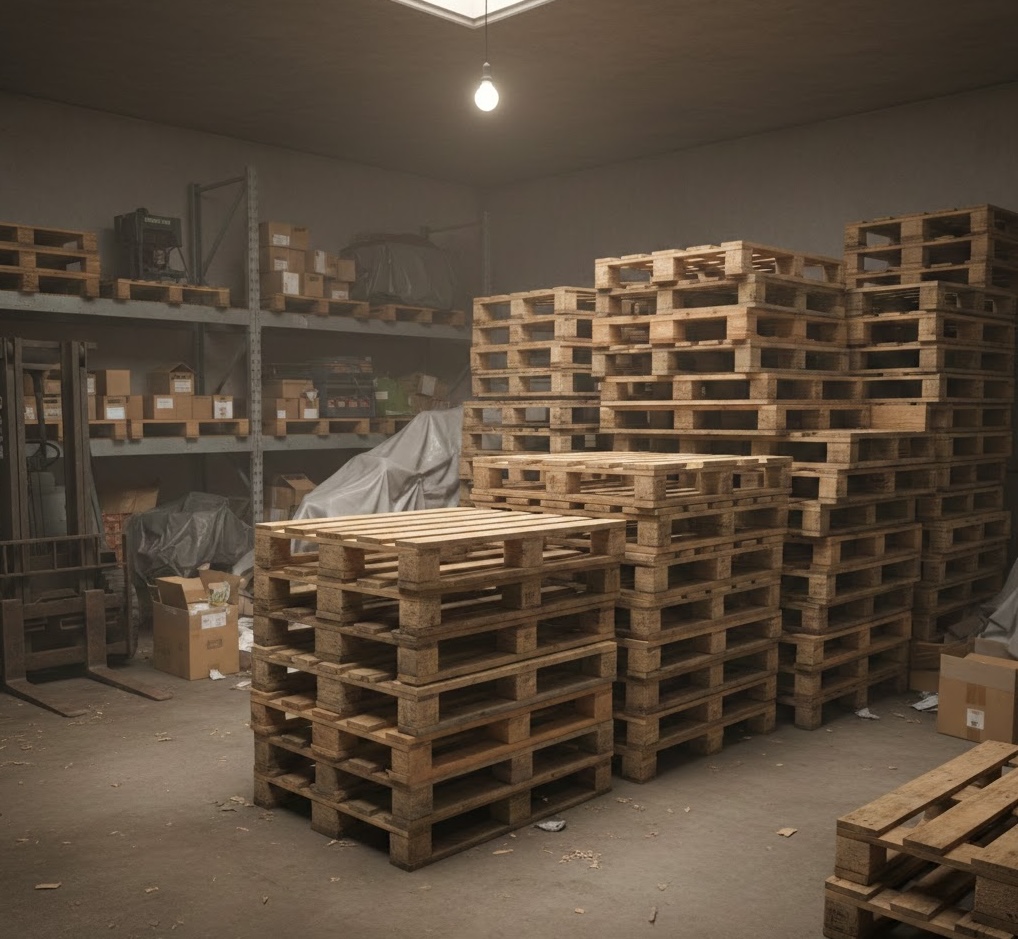
The decision between renting pallets through a pooling program and purchasing pallets outright is one of the most significant logistics choices a business can make. Both models have vocal advocates, and the right answer depends on your specific shipping patterns, volume, customer requirements, and operational capabilities. This guide breaks down the financials, logistics, and hidden costs of each approach so you can make an informed decision for your operation.
Pallet pooling, offered by companies like CHEP, PECO, and iGPS, works on a rental model. You pay a per-trip fee, typically 4 to 8 dollars per pallet movement, plus potential transfer fees, damage fees, and loss fees. The pooling company handles all maintenance, repair, sorting, and redistribution. You never own the pallets and do not need to manage pallet inventory, storage, or disposal. This simplicity is the primary appeal. For businesses with irregular shipping patterns, one-way shipments, or limited warehouse space for pallet storage, pooling eliminates significant operational complexity.
Buying pallets, whether new or recycled, gives you ownership and control. A quality recycled pallet costs 5 to 10 dollars and can be used 5 to 15 times before needing repair or replacement. The per-trip cost of owned pallets, including purchase, repair, storage, and eventual disposal, typically ranges from 0.75 to 1.50 dollars per trip. This is dramatically lower than pooling fees on a per-trip basis. However, ownership requires you to manage pallet inventory, coordinate returns from customers, arrange repairs, handle storage, and deal with end-of-life disposal or recycling. These operational costs are real and must be factored into the comparison.
The break-even analysis depends heavily on your pallet retrieval rate. If you ship to customers who reliably return pallets, purchasing is almost always more cost-effective. If your pallets go to diverse destinations with poor return logistics, the loss rate erodes your ownership economics. A general rule of thumb: if you can retrieve more than 60 to 70 percent of your pallets, buying is usually cheaper. Below that retrieval rate, pooling often wins because the pooling company's established collection network absorbs the loss risk. Many businesses find that a hybrid approach works best, purchasing pallets for predictable, high-volume lanes and using pooled pallets for less regular or one-way shipments.
Hidden costs exist in both models. Pooling programs often include fees that are not immediately obvious, including transfer fees when pallets move between participants outside the standard flow, damage charges for pallets returned in poor condition, and administrative fees for account management and reporting. On the purchasing side, hidden costs include warehouse space dedicated to empty pallet storage, labor for sorting and inspecting returned pallets, capital tied up in pallet inventory, and the management time required to run a pallet program. Request detailed fee schedules from pooling providers and build a comprehensive cost model for ownership before making your decision.
Tags: