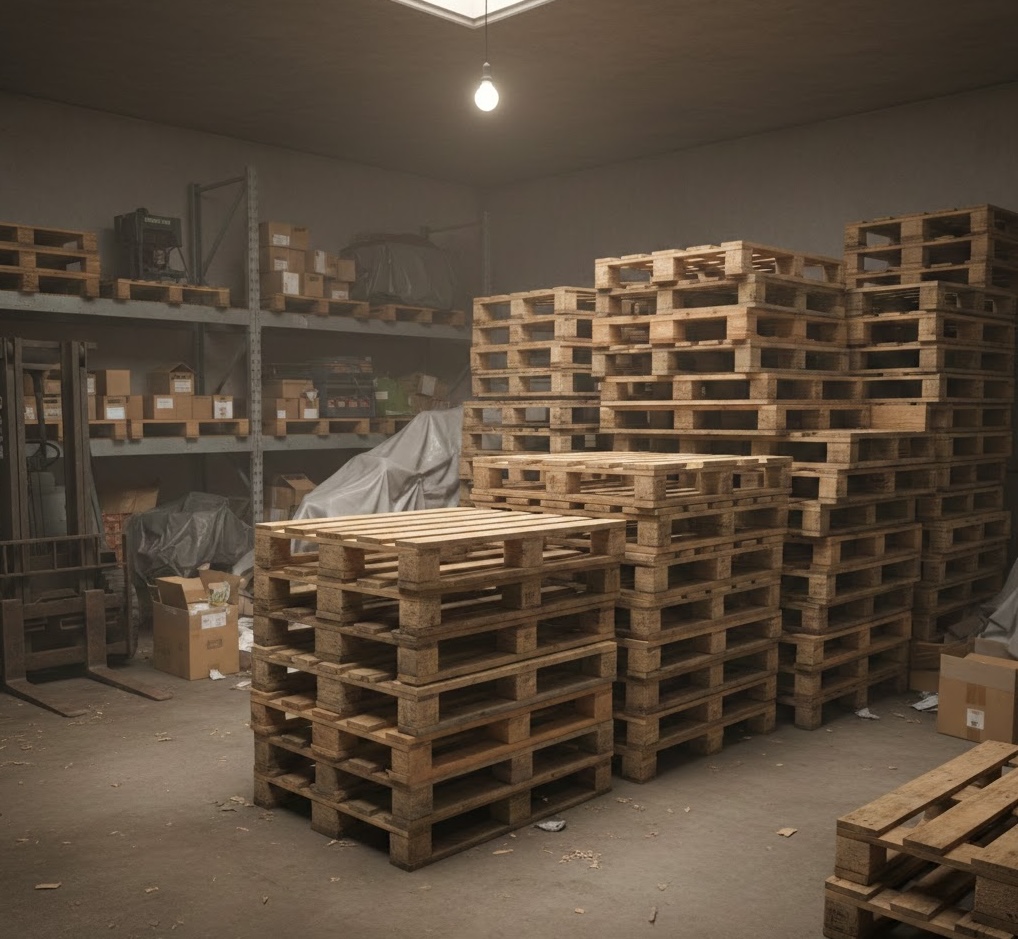
When businesses compare new and recycled pallets, they often focus solely on the purchase price. But the true cost of a pallet extends far beyond the initial transaction. A comprehensive total cost of ownership analysis must account for purchase price, expected lifespan, repair and reconditioning costs, storage and handling expenses, disposal fees, and increasingly, the environmental externalities that affect corporate sustainability reporting. This 2026 analysis uses current market data to provide an accurate comparison that helps businesses make informed decisions.
As of early 2026, a new standard 48 by 40 inch GMA stringer pallet costs between 12 and 18 dollars depending on lumber grade, regional availability, and order volume. Lumber prices have moderated from their pandemic peaks but remain approximately 20 percent above pre-2020 levels due to sustained demand and mill capacity constraints. A comparable Grade A recycled pallet costs 7 to 10 dollars, a Grade B recycled pallet costs 5 to 8 dollars, and a Grade C recycled pallet costs 3 to 5 dollars. On purchase price alone, recycled pallets offer savings of 30 to 70 percent depending on grade.
Lifespan analysis narrows the gap somewhat but still favors recycled pallets on a per-trip cost basis. A new pallet typically lasts 15 to 20 trips before requiring repair or replacement. A Grade A recycled pallet averages 8 to 12 trips, Grade B averages 5 to 8 trips, and Grade C averages 3 to 5 trips. However, when you calculate cost per trip, new pallets cost approximately 0.80 to 1.20 dollars per trip, Grade A recycled pallets cost 0.70 to 1.00 dollars per trip, and Grade B recycled pallets cost 0.65 to 1.00 dollars per trip. Grade C pallets at 0.75 to 1.25 dollars per trip are comparable to new pallets on a per-trip basis but serve different use cases.
Repair and end-of-life costs significantly impact total ownership expenses. Professional pallet repair costs 2 to 4 dollars per pallet, extending usable life by several more cycles. New pallets that need repair cost the same to fix as recycled pallets, so the repair economics are equal. Disposal costs, however, disproportionately affect new pallet users. If a new pallet is disposed of after one use rather than being recycled, the effective cost skyrockets. Disposal fees range from 1 to 3 dollars per pallet for landfill, while recyclers may charge nothing or even pay you for end-of-life pallets with remaining material value.
Environmental cost is the newest factor in the equation and is growing in importance as ESG reporting becomes mainstream. Each new pallet carries an embedded carbon footprint of 25 to 30 kilograms of CO2 equivalent. Recycled pallets carry only 5 to 8 kilograms. For a business using 50,000 pallets per year, switching from all-new to recycled pallets reduces annual carbon emissions by roughly 1,000 metric tons of CO2. Some companies are now assigning a shadow carbon price of 50 to 100 dollars per ton to internal procurement decisions, which adds 1.25 to 2.50 dollars to the effective cost of each new pallet. When all factors are combined, recycled pallets deliver 25 to 55 percent lower total cost of ownership than new pallets for the vast majority of applications.
Tags: