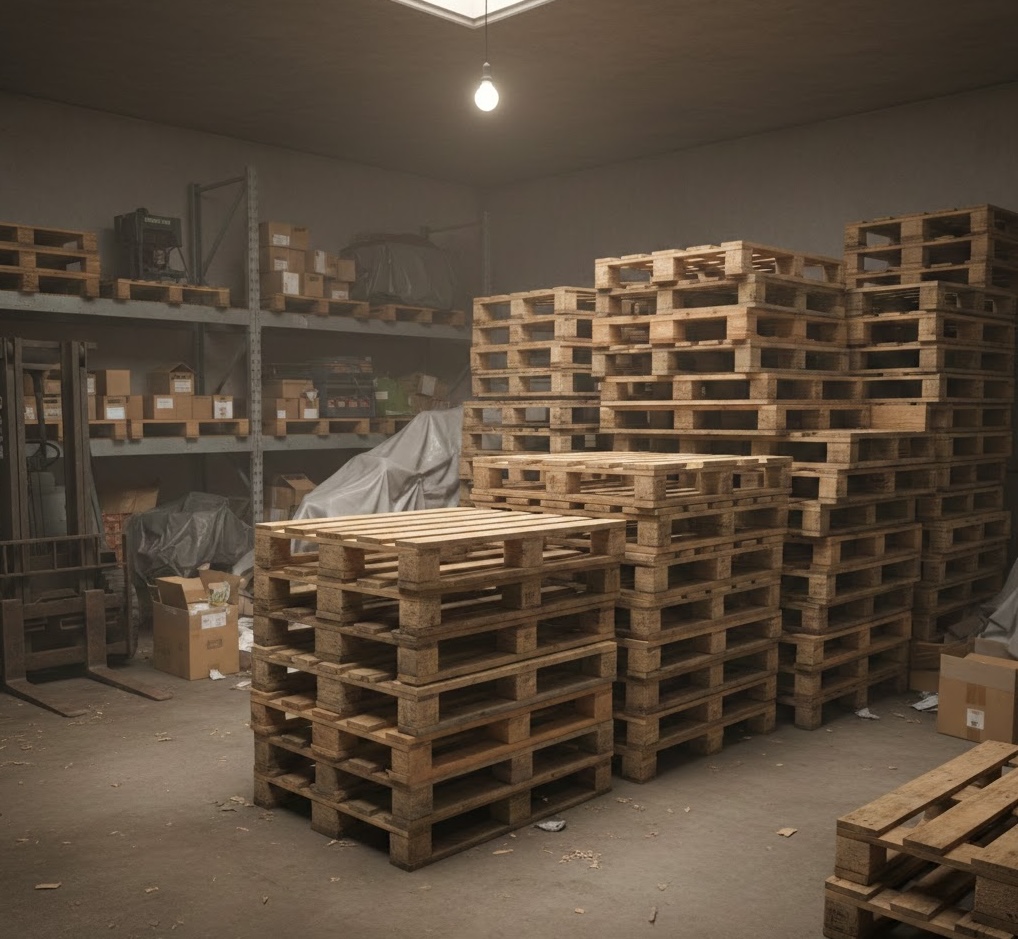
Choosing the right pallet material is one of the most consequential decisions in supply chain management. Each material offers distinct advantages and limitations, and the best choice depends on your specific application, budget, industry requirements, and sustainability goals. Wood remains the dominant pallet material globally, accounting for approximately 90 to 95 percent of all pallets in circulation. However, plastic and metal pallets have carved out important niches where their unique properties make them the superior choice.
Wood pallets are the most cost-effective option, especially when purchased as recycled units. They are readily available in all standard sizes, easily repaired, and fully recyclable at end of life. Wood pallets provide excellent friction for stacking and can be custom-built to virtually any specification. Their main drawbacks include susceptibility to moisture damage, potential for splinters and protruding nails, higher weight compared to plastic, and the need for ISPM-15 treatment for international shipping. Wood pallets are ideal for domestic shipping, general warehousing, and applications where cost efficiency is the primary concern.
Plastic pallets offer superior hygiene, consistent dimensions, and long service life. They do not absorb moisture, are resistant to chemicals, and are free from nails and splinters. Plastic pallets are lighter than wood (typically 30 to 50 percent lighter) and do not require ISPM-15 treatment for international shipping. However, they cost 3 to 5 times more than wood pallets upfront, cannot be easily repaired, and have a higher environmental impact in manufacturing. Plastic pallets are the preferred choice for pharmaceutical, food processing, electronics, and cleanroom environments where contamination control is critical.
Metal pallets, typically made from steel or aluminum, offer the highest load capacity and longest lifespan of any pallet material. They can support extremely heavy loads, withstand harsh environments, and last for decades with minimal maintenance. Metal pallets are non-combustible, making them suitable for high-temperature applications and fire-sensitive environments. Their disadvantages include the highest upfront cost, heaviest weight, and potential to damage products and equipment due to their rigid construction. Metal pallets are most commonly used in heavy industry, military applications, and permanent or semi-permanent storage systems.
Tags: